Regret. Can I have a Do-over?
You know what it’s like - the feeling after doing or saying something with little thought. You can’t undo or unsay it. Is there a way to have a do-over or learn from it? Let's find out...
ARTICLE
Dr Rennie Du Plessis
11/23/202510 min read
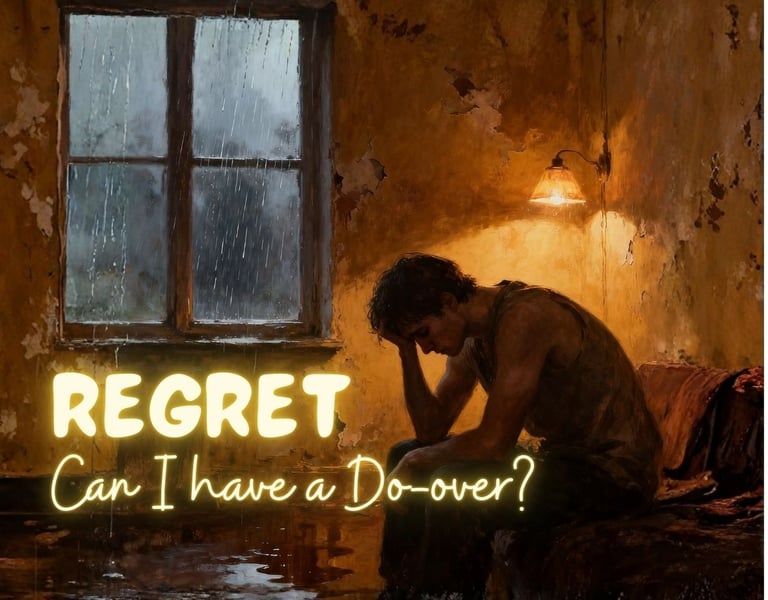

You feel you should have known better. You have a sinking feeling about the mistake you have made and the opportunities lost, with a wish that you could undo the event and get a second chance. It’s out there, and it’s not going to go away, no matter how bad you feel about it. You’re gutted. So, what now?
To answer that, let’s first look at what regret is.
Regret is the emotion you experience when you realise or imagine your present situation would have been better had you decided or acted differently. The starting point of regret is when you compare what has happened and what could have happened if you had chosen differently. You take ownership of the outcome and the sense of loss or sorrow at what might have been. The feeling of regret over bad decisions and wrong choices makes them stand out in your memory and can help you make better decisions in the future.
Regret can also stem from counterfactual thinking. This is the painful emotional experience of "if only," comparing actual results with better "what-if" scenarios, frequently leading to rumination, anxiety, and, in cases of inaction, long-term regret.
The easier it is to see a different outcome, the more likely you are to regret the lost opportunity. We all experience this at some time in our lives. That missed opportunity to speak out, to witness, to tell someone you love them, to spend time with a loved one who died, to act differently or not act the way you did. As you read this, I'm sure a regret you've had popped into your mind, together with the emotions you have that accompany that regret.
The less opportunity you have to change the situation, the more likely regret will turn into rumination and chronic stress that damage mind and body. This can be changed by choice.
Regret can have damaging effects on the mind and body when it turns into fruitless rumination and self-blame that keeps you from re-engaging in life. This pattern of repetitive, negative, self-focused ruminative thinking is characteristic of depression and can cause mental health problems as well. Other research shows regret can result in chronic stress, negatively affecting hormonal and immune system functioning. Regret impedes the ability to recover from stressful life events by extending their emotional reach for months, years, or a lifetime.
Living in regret. Lingering regrets, the kind you hang onto for years, can keep some part of you living an alternative version of your life and career. Living in constant feelings that you should have known better or done better in the situation and not lost the opportunity creates a never-ending repeat loop - you cannot get distance or perspective to forgive yourself and let it go, so you can move on.
Regret experienced as a constant state of punishing yourself will keep you in the cycle of regret and pain.
This state is experienced as an aversive emotional state that focuses your attention on your role in what happened and the negative outcome. We are primed to avoid pain, but we can become so immobilised by regret that we feel it’s easier to bear the pain of regret rather than launch out into changing. Left to fester, it will control your mood and emotions adversely and make you miserable.
Time and regret.
Over short periods, you are more likely to regret actions taken (the stupid things you’ve done or bought) and mistakes made (your words and behaviour). Over long periods of time, you are more likely to regret actions not taken (your inactions), such as missed opportunities for love, schooling you never finished, the career you never pursued or working too hard and not spending enough time with the family.
Time decreases the regret for your unfortunate action but increases the regret for inaction. You’ll forget that impulse buy, but the fact that you didn’t finish your studies to pursue your dream job – your failure to act - can linger for a lifetime.
The upside to regret.
Is there anything good about regret? Yes!
According to various studies, people tend to feel most regret about things that they can still improve in the future, referred to as the opportunity principle in regret. The pain of regret can motivate you to take corrective action and pursue a new path to ensure better outcomes in the future. You can think about how the negative event came about and how you could change it, or how you could prevent a future occurrence. It can also create the desire in you to undo the damage of the event if given the chance and prepare you to behave differently when you are confronted with similar choices in the future. We see this in 2 Corinthians 7:9-11, where Paul commends the Corinthians for the change made as a result of regret.
By embracing regret and asking how you may do things differently, you steer your life away from living in that regret unchanged.
Don’t suppress regrets and don’t take on a ‘no regrets’ bravado. Neither will serve you in the long run.
The power of Regret in decision-making.
Regret is tied to decisions. Unlike other emotions, regret is exclusively tied to decisions and is therefore a decision-related emotion.
In regret, personal action and responsibility are central.
Regret is felt as perceived bad decisions. Thoughts about it don’t have to produce regret, just those specifically that change a bad outcome into a good one by changing the decision or choice.
Was my action justified? People feel most regret over decisions that are difficult to justify. Decisions that are based on solid reasons produce less regret than decisions that are not well thought through. Armed personnel, doctors and others who have to make hard decisions have a term, ‘I made a call’. It helps to contextualise the decision made in line with what was happening at the time. Context is very important in decisions made.
Regret is a passive emotional reaction to bad decisions and a major influence on day-to-day decision-making. So how do you decide? Realise you always have a choice in your decisions, so get the big picture on decisions.
Regret can incline you to reverse your decision or undo the consequences.
You may anticipate possible future regret when making a decision and choice in such a way that this future regret will be minimal. Here are the ways you can do that:
1. Avoid deciding so you can avoid making the wrong decision, but this results in regret as the long run inactions produce the most regret.
2. You may avoid or delay your decisions because you want to gather more information to make better decisions.
3. Avoid feedback about nonchosen options. In important life decisions feedback is often not present. Going into business with someone or marrying someone, the person will never find out how successful they would have been had they chosen another partner. There is only feedback on the chosen option. These anticipations of regret can influence many real-life decisions. Make a call and go with it.
The hot and cold of regrets.
Selling your house at the wrong time becomes a lesson learned. When you miss a birthday, you might ask yourself why and assess your relationship with that individual, because you feel guilty about having messed up. It’s hard to leave that kind of problem unresolved. However, we don’t feel the same pressure to process regrets for the path not taken, largely because the absence of action doesn’t elicit a ‘hot’ emotional response (like anger or guilt) the way making a mistake does.
Me, myself and I.
A lot of guilt happens inside ourselves. We believe we are an actual self – the person we really are. But we also believe we should be the ideal self - your most fulfilled and majestic self, and the ‘ought’ self - the one who meets all expectations. The regrets of inaction relate to your unrealised, ideal self and cause the most long-term sorrow. Because being aware of the gaps between your actual self and your ought self triggers ‘hot ‘ emotions, similar to those we feel after making a regrettable mistake – we feel guilty or embarrassed or disgusted with our behaviour. By contrast, failing to take action that could have made us happier leads to shrugs, and feelings of sadness or disappointment – ‘cool’ emotions we believe we can deal with later, but later never comes.
In the long run, that ‘cool’ reaction, which is very small in the beginning, grows and becomes bigger and bigger. It’s a cold emotion that doesn’t burn from the inside in the same way that guilt and shame do, but 20 years of this cold emotion can become really painful.
To move forward on these regrets, ask some real questions about the regret – frame it. Were the lofty goals too unattainable, too abstract to be pinned down and graded? Could I really have achieved that, considering what my life was and the knowledge I had then?
Context matters. The regrets of what you should’ve done tend to be attached to situations or environments which fluctuate. As these follow us throughout life, think about how you can take a version of it that you CAN do right now and do it.
By now, knowing what most people regret, look inside and ask, ‘What type of person am I?’ ‘Am I the type of person who has big dreams, or believes that dreams are important, and I have aspirations, that for some reason, I’m not pursuing. Or am I the type of person who thinks my responsibility to others is most important? Maybe you would actually more deeply regret destroying your family’s financial security to start your own business than you would never striking out on your own.
Weigh your regret in the context of all the other factors.
What if you are at a point where you are offered a job at a ski resort in Switzerland, starting the same month you are supposed to take the entrance exam for university? You can’t do both, so do you ‘turn right to your should’ or ‘turn left to your could’? This is a place we often find ourselves when we’re choosing a college major, a career path or the next step. Let’s say you made a right turn and took the exam. While doing this, you can still make the ‘could’ part of your life happen in a different way. Take up skiing and save for holidays where you can enjoy and develop it, and continue in your chosen field. Your large and small actions can shift the scales closer to that neglected ideal self, and help you to begin to let go of the regret in its grasp.
Realistic Rewind on regret.
There are times when an event in your life will suddenly bring regret into focus. For example, let’s say you’re not very close to your family and suddenly one of them is celebrating a milestone in their life. They’re interacting with each other, but you’re very much on the outside because you don’t have the same closeness. Regret that this is so, wells up in you. How do you cope with this? Visit this regret properly by sitting and thinking, if you could rewind your life knowing what you know and being who you are, is there any realistic way you could’ve made it better? Living the life you have lived, could the relationship have been different? In a realistic regret rewind, you are rarely in a place where you could’ve made it different without rewriting your life. Also, the other people in your life would have to act differently and rewrite their lives. So, if you really cannot see how anything would’ve made the relationship different, accept the regret as real but detach yourself and others from the blame. Now, from this new, liberated place for yourself and others, can you build something closer where you can begin to change the relationship in small steps? Take time to look at your other relationships and how you can improve them.
Do-over as make over.
Listen to this emotion. Your brain is telling you to look at your choices because your actions may be leading to undesirable consequences in your life.
If you can’t change the situation, let it go. If you’re stuck blaming yourself and regretting past actions, it could turn into depression and damage your self-esteem. Find a way to forgive yourself or at least make peace with the situation and let it go. What would you say to a loved one in the same situation to make them feel better? Now, follow your own advice.
Make sure you are not taking too much blame. Consider the circumstances at the time that may have made it more difficult to make good choices, or the fact that you had limited knowledge at the time. Perhaps you had to make a quick decision without full knowledge, under time pressure or had multiple stresses going on. Factor that in.
Think about life as a journey. Everybody makes mistakes. These can be learning opportunities that teach important lessons about yourself, your ways of reacting, values, vulnerabilities, triggers, and also about other people and how to take better care of yourself.
Contextualise what happened. Develop self-interventions to help you understand how much chance or outside factors played a role in your choices, versus your own actions. This will result in decreased self-blame and regret and increased planning and thinking about future choices.
Focus on the present moment. Stop yourself when you are in self-judgement or just dwelling on the pain and regret. Enjoy your life in this moment with all its imperfections.
Be kind to yourself. Forgive yourself for mistakes and lost opportunities. You have done your best, given the circumstances. Let go, be compassionate to yourself and seek peace.
Who are you? Look inside and ask, ‘What type of person am I?’ ‘Am I the type of person who has big dreams, or believes that dreams are important, and I have aspirations that for some reason I’m not pursuing? Or am I the type of person who thinks my responsibility to others is most important? Would you regret losing your family’s financial security more than not starting your own business? Peace about decisions is about choosing the solution you can live with that will help you move beyond this point to wholeness.
Life’s messy; we make mistakes, and we don’t always allow ourselves the freedom to have a life makeover. ‘Why not give yourself this gift?’
I've written a book that can help you in your life makeover, which will assist you in living in the light of God. Living like this will allow you to avoid some areas that could cause future regrets. No one lives totally regret-free, but basing your life and decisions on living in the light will empower you to live in greater liberty as a believer. 'Light in Light out: Empowered Living in Spirit and Truth' shows that your life contains all the power and potential of the kingdom of light. This book reveals how to use all that power to live your life at full potential as a light being in this kingdom of light.
For your copy, click the button below and subscribe for monthly content that will uplift, inspire and equip you for growth.
Do you know someone who can benefit from this post? Send them this link...