It was a Dark and Stormy Night...
We construct a reality around our perceptions. And our minds give that reality substance in how we live, make choices, and handle the dynamics of change.
ARTICLE
Dr Rennie Du Plessis
3/9/20264 min read
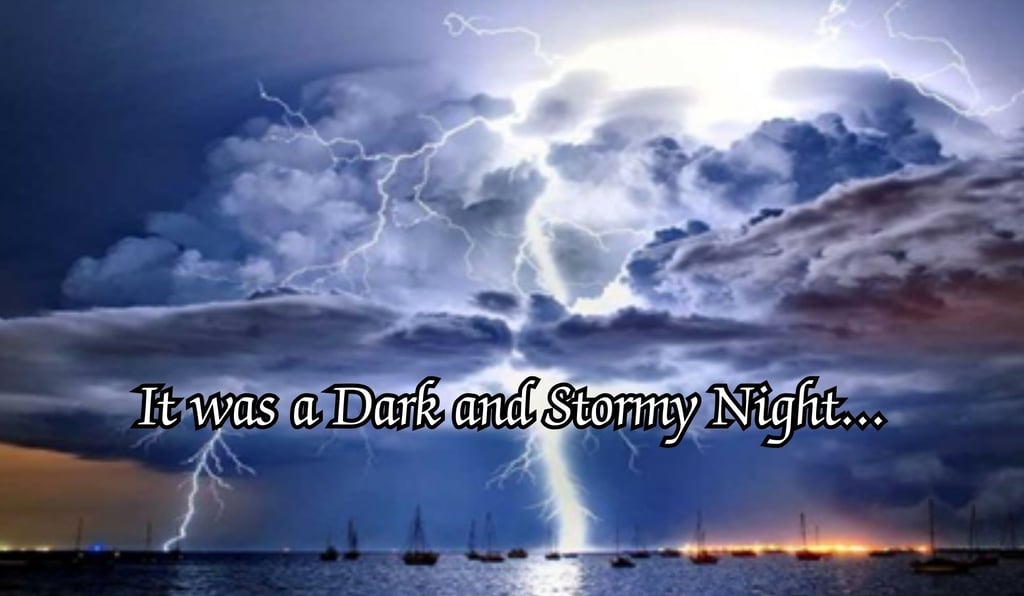

To a storyteller, this well-known one-liner is the tongue-in-cheek, always cheesy introduction to an imaginary adventure, and to the farmer it is the very real promise of precious water on the crop, whilst to the frightened traveller it is the dreaded drive home in the rain.
Three different responses to the same event are determined by the three perspectives held.
Your perspective will determine your reality. Not reality, your reality. Let’s explore this through an interesting exercise. Take a moment to look around the room and memorise everything brown. Now close your eyes and recall what is brown in the room. Did you find that you could easily bring to remembrance quite a few brown items? Now, without looking, try to recall all the reds in the room. Did you have to think much harder? Why?
Because you had focused on the brown things that surround you and paid little attention to anything else. But brown is clearly not the whole room – it’s a selected snapshot, one aspect of that room and your experienced perspective. We have highly efficient brains. Filtering of data is necessary. Otherwise, we would be overwhelmed by normal living.
But we can get into grooves, where we are reacting rather than responding - viewing life from a wrong or limiting or skewed perspective without ever questioning our perspective. The problem with living an unquestioning existence is that we could miss out on life itself and all its beauty, fun, learning, loving, adventure and growing. Our perspective determines our reality. Let’s go back to the start of this article and the storyteller, farmer and traveller, and their three different perspectives to the same event…
Understanding the perspectives of the storyteller, the farmer and the traveller: “In many ways, we do not act according to the truth. We act according to the truth as we believe it to be... The human mind innately responds to 'psychological certainty' by creating very real blind spots to evidence and arguments that contradict the certainty. Anyone aspiring to be objective in viewing evidence and sorting through arguments needs to develop a degree of self-doubt to minimise the automatic and natural actions of the human mind.” Watching for Critical Blind Spots, Mark Alexander.
Self-doubt should take the form of knowing that you have some confirmation bias (choosing only evidence that proves your beliefs or theories) and that you’re open to course corrections in thinking and in life. By having the emotional and creative skills to change long-held limiting perspectives, you can move into the reality of the full potential placed in you by your Creator.
Our minds constitute, in measure, the same properties in the Creator’s mind. In relating to and assessing our world, we’re made to act like our Creator. We construct a reality around our perceptions. And our minds give that reality substance in how we live, make choices, and handle the dynamics of change.
Let’s give this a closer look…
All thoughts are coloured by the programming in our mind network - we select ‘save’ or ‘delete’. Our minds (the centre of us) treat our thoughts as real and tangible and bring about bodily and mental responses to the reality of this place and moment in time. Our programming determines HOW we think and how we RESPOND to what we think. Thought comes from our inner network and has energy to organise and determine our action and what we’ll create due to that thought as Proverbs 4:23 shows.
Think of a lemon. Imagine yourself peeling back the waxy skin as the citrus smell fills the air. You part the soft segments and pop one into your mouth. The tart juice fills your mouth as your cheeks tighten, and your eyes narrow as the taste fills your mouth. What is happening in your body in this moment?
This Lemon Memory test shows just how much your present is affected by memories of the past. We can learn to assign to our memories the correct power and place in our lives so they may become motivators of the future and gentle curators of our past.
Memory retains and decides future actions.
We use memory to strengthen emotions and relationships.
Memory defines our points of reference and our reality in the sequence of life.
We can retrieve ‘memory photos’ of previous events with similar conditions and set off the same behaviour and feelings experienced at the time of an event or trauma. Untended, it can be a clashing and binding point between our own potential and the limitations of the distortion in our mindscape that will cause a divided mind or double-mindedness. We can correct it!
We can learn to remember what happened without the remembering being our ‘lemon memory’ in the present. We can’t help what we remember - we can learn how we remember. We choose which memories have power over us and which we use to build faith, release potential and bring positive change and growth so we live a more satisfying life.
Take a fascinating look at your mind and the power it has to create for you the life you want by reading my book 'Create Your New Mind: Solve the Mind Puzzle and Create the Best Version of You.' Would you like to fully understand your mind and the incredible power God placed in it? Starting from the foundation of the bible, this comprehensive book explores psychology and science to show how the mind works and how you can operate in a mind without limits, the amazing power of a new mind and the possibilities released in your life, how to program your subconscious to let go of blocks preventing you from moving forward and clear easy steps to get you to living a life of destiny and give you the tools to help others to a powerful life. Just click the button below to start reading, and please subscribe for great monthly content by clicking the subscribe button below.
Do you know someone who can benefit from this post? Send them this link...